·
The True Cost of AI Headshots – Value for money pack
AI headshots are everywhere now. LinkedIn, resumes, company profiles — the polished headshot has become the new digital handshake. But if most services use similar AI technology, why are some charging $40, $60, or even more? And why are people still paying?
Let’s dive deep into what you’re really paying for, what matters (and what doesn’t), and why hosan.in is different.
Why Are They Costly?
AI headshots are not just a matter of pressing a button and waiting a few seconds. Behind every polished result lies heavy computing power, careful engineering, and sometimes even human effort.
For example, renting GPUs on the cloud is not cheap. On AWS, running a high-end GPU like an NVIDIA A10G or L40 can easily cost around $2.50 per hour per GPU, and training your persona often requires hours of compute time. That’s before you even factor in storage costs for all the training data and generated images.
To make the images truly look like you, the AI has to go through model fine-tuning — a process where the system learns your unique facial features and adapts them into different outfits, backgrounds, and styles. The more training, the better the results and resolution — but also the higher the GPU cost.
It’s also not as simple as “upload selfies, get headshots.” Companies spend months refining their pipelines:
- Preventing identity drift (when the face stops looking like you)
- Balancing attire and background variety
- Optimizing prompts and filters for consistent outputs
And then comes the human element. Some services include manual retouching, customer support, refunds, or even designer-polished images. For example, a few providers charge premium rates to have an editor pick and polish your top 5 images. That does guarantee results — but also drives the price up to the level of traditional photography. Plus, the back-and-forth communication often kills the “instant” promise of AI.
This is why no serious provider can be free. You’re not just paying for pixels — you’re paying for compute, engineering, and sometimes human artistry.
Quality — Are They Really Different Now?
When AI headshots first arrived, the quality gap between providers was huge.
But in 2025, most leading platforms produce fairly comparable realism if you give them decent input selfies.
That said, “quality” has three different dimensions worth unpacking:
- Fidelity — How close the image actually looks like you.
- Acceptability — Whether the photo is good enough for LinkedIn, resumes, or official use.
- Representability — Whether the headshot actually feels like you in a professional context.
Here’s the catch:
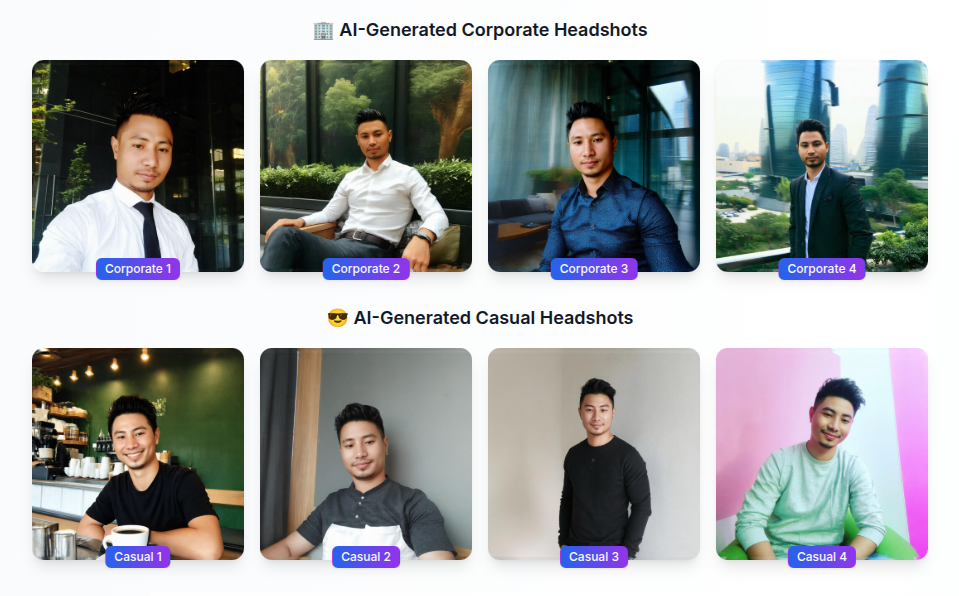
Not every generated image will be perfect. In fact, out of 40–60 outputs, you might only find 4–5 truly representative ones that you’d proudly use as your headshot.
And that’s normal. Even in a traditional photo shoot, a photographer might click 200 photos — only 5–10 make the final cut.
Reddit discussions reflect the same:
- To outsiders (recruiters, colleagues, LinkedIn connections), AI headshots look convincingly professional.
- But to people who know you well (friends, family, co-workers), some images may look like your “brother” or “close cousin.”
Interestingly, this isn’t unique to AI. Even studio-retouched photos sometimes give the same “too polished” vibe. The key is not whether every output is perfect, but whether the service can consistently deliver a handful of strong, believable portraits.
Does Count Matter?
This is one of the most misunderstood aspects of AI headshot services.
More images ≠ more usable images. Providers often advertise 100+, even 200+ headshots. Sounds great, but here’s the hard truth:
Out of 40+ images, only a fraction (maybe 5–8) will be truly usable and shareable.
For individuals, usually 5–10 solid headshots are more than enough — LinkedIn, resumes, personal branding. For teams or heavy social media users, bigger packs make sense because you need multiple styles and consistent looks.
But paying more just for inflated counts doesn’t make sense. In my view, a 30+ image package is ideal, because it practically guarantees you’ll get 5 excellent headshots. And those 5 are often worth every rupee/dollar, since they’ll represent you everywhere professionally.
So when judging value, don’t just ask:
- “How many images will I get?”
Instead ask: - “How many good images will I actually use?”
The Pricing Reality Check
Here are screenshots from actual competitor pricing pages:
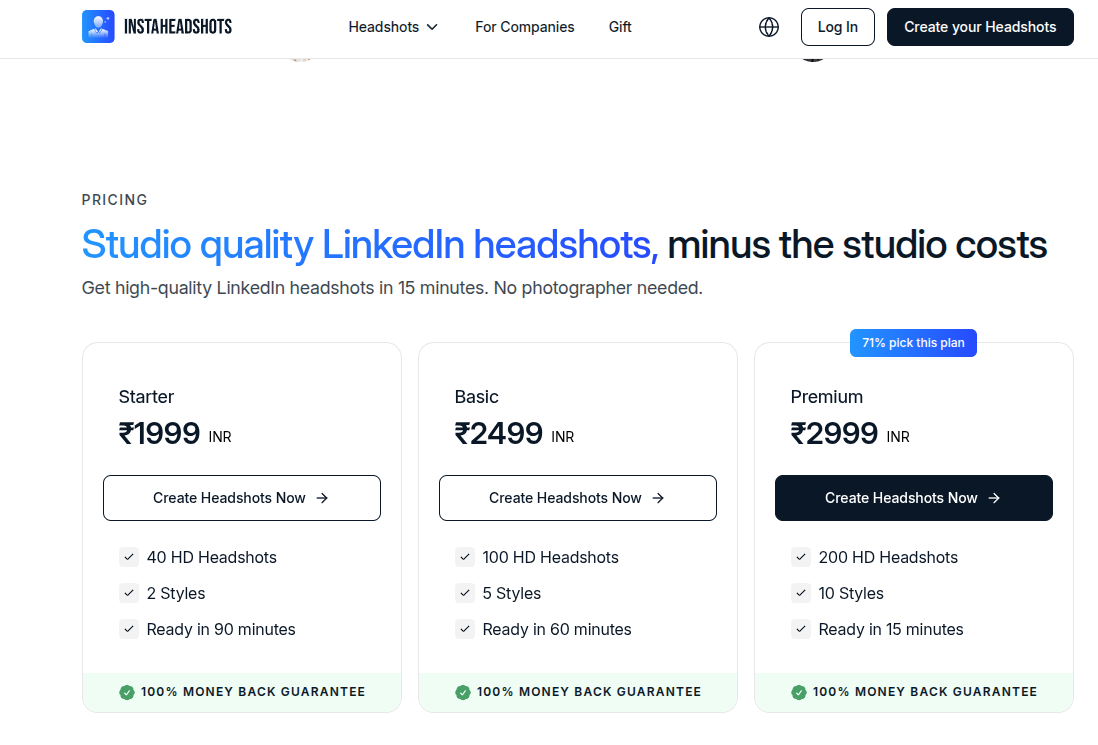 Approximately USD $22 | $30 | $38
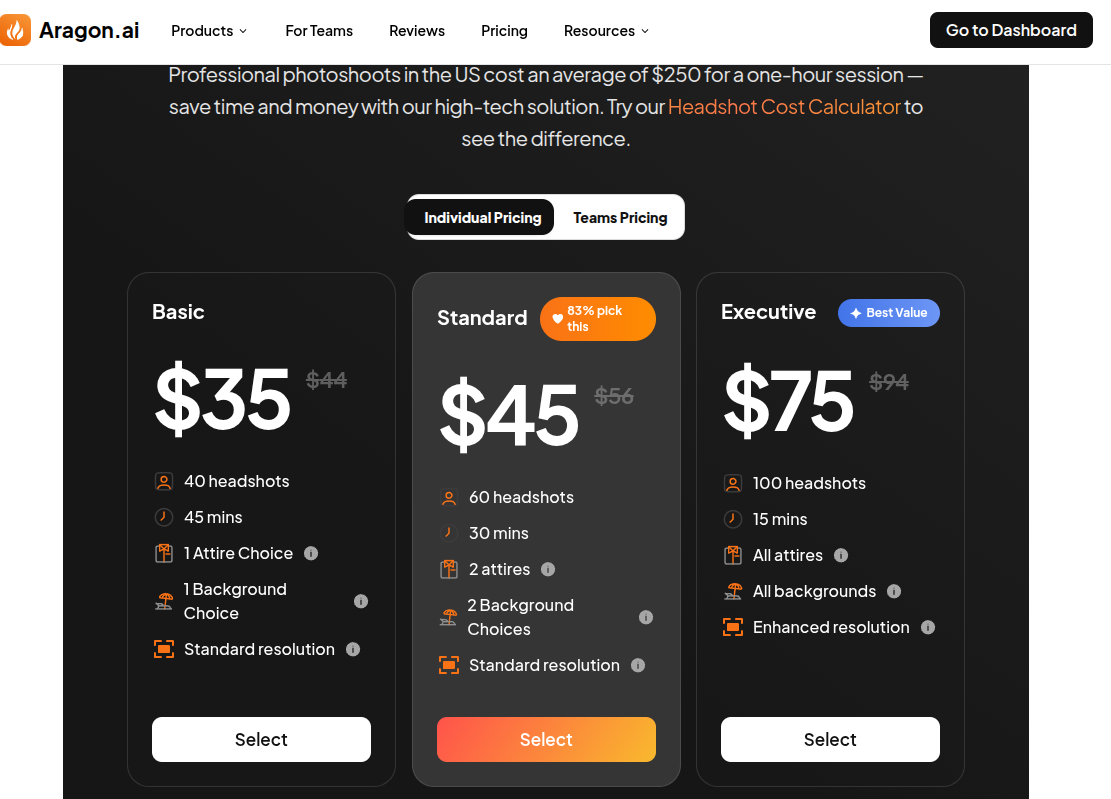
Current Price USD $35 | $45 | $75
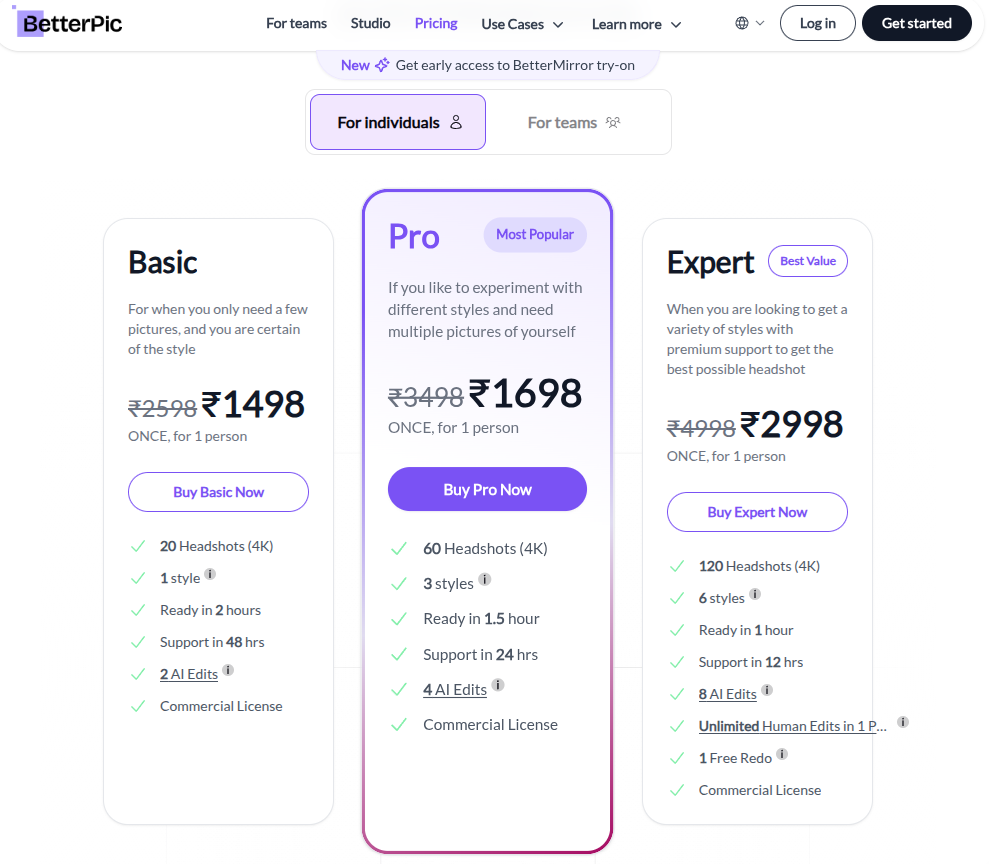
Approximately USD $17 | $20 | $35
Most range from $20–$60 per package. Some add upsells for retouching or “premium” styles. Others advertise 200+ outputs, knowing you’ll probably only use 5–10.
The VC Problem
Many competitors are VC-funded startups. Their priority isn’t customer-first — it’s investor-first.
That often means:
- Inflated pricing to cover marketing spend
- Aggressive upsells
- Features built for growth metrics, not customer value
In the end, customers pay more — not for better results, but to support the startup’s growth story.
Why headshot.hosan.in Is Different
hosan.in is built on a simple promise: best value for money.
- No VC funding — lean, customer-focused, sustainable.
- Fair pricing — no “200 headshots you’ll never use.” Pay only for what matters. 80 is more than sufficient to select the best out of it.
- Same (or better) technology — optimized pipelines for reliability and reduced drift.
- Autopilot results — no human-in-the-loop upsells. Just consistent, automated quality.
Here’s a look at our pricing:
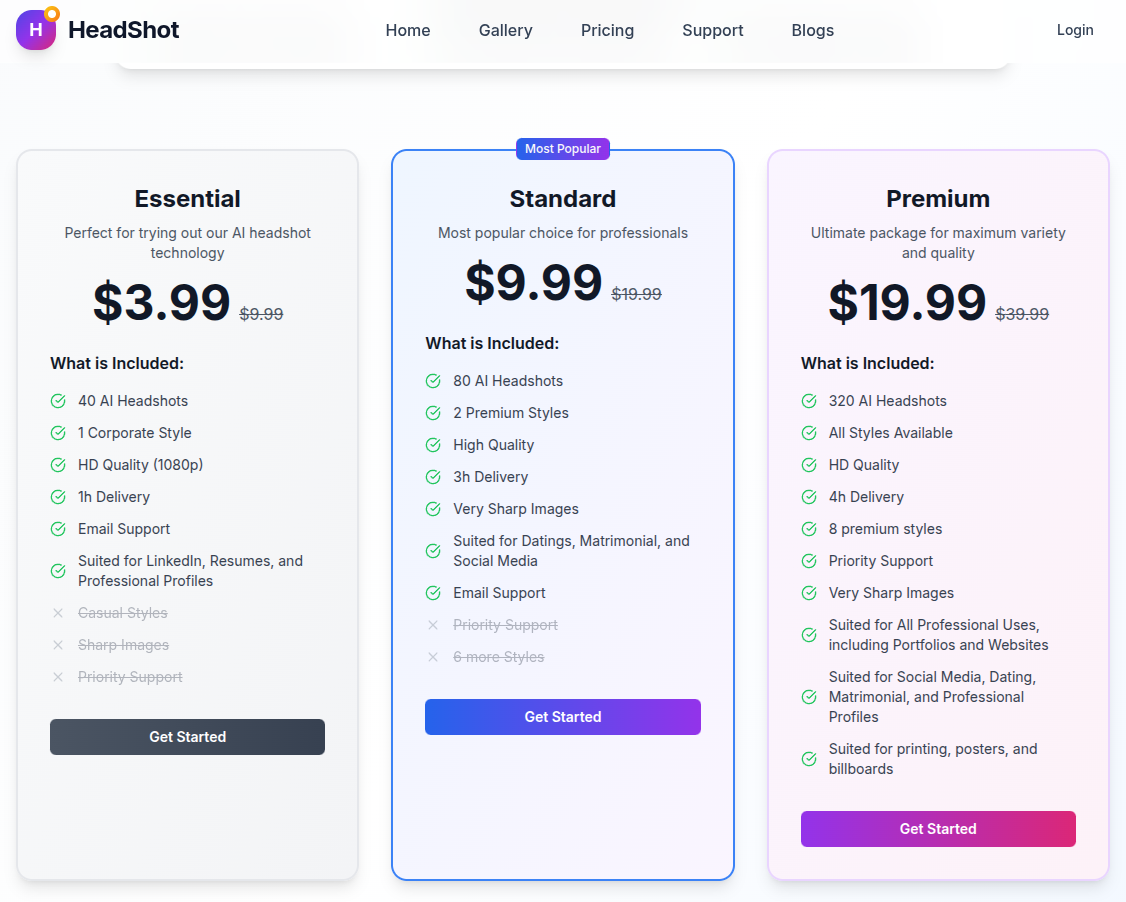
When you strip away the noise, the choice is simple:
- Overpriced, investor-driven competitors
- Or headshot.hosan.in — fair, reliable, value-driven headshots
Final Word
AI headshots aren’t magic — they take compute, engineering, and refinement. The quality is now fairly uniform across providers. What really matters is how many usable headshots you actually get, and at what cost.
That’s why headshot.hosan.in exists — to give you headshots that look like you, at a price that respects you.